
by Anthony Watts, a Senior Fellow for Environment and Climate at The Heartland Institute for The American Thinker
For decades, Americans have been bombarded with frightening predictions about global warming, now more commonly called “climate change.” We have been warned of disappearing islands, starving polar bears, unprecedented hurricanes, collapsing food supplies, and a planet supposedly approaching catastrophe.
Scientists have issued warnings, politicians have repeated them, and the news media have amplified them. Rarely does a major weather event occur today without someone suggesting that climate change has made it worse.
But after decades of predictions, we have something more valuable than alarming computer projections: actual observations. Newsflash: those observations provide considerable reason for optimism about our future.
Consider the evidence assembled in Climate at a Glance, a collection of more than 50 climate topics drawing on data from organizations including NOAA, NASA, the EPA, and the United Nations Intergovernmental Panel on Climate Change (IPCC).
The picture painted from actual data is considerably more encouraging than the nightly news would have you believe.
Extreme weather: The missing catastrophe.
The extraordinary decline in weather-related deaths is a lesson that flies in the face of worst-case predictions.
We are repeatedly told that hurricanes, tornadoes, floods, and droughts are becoming unprecedented disasters.
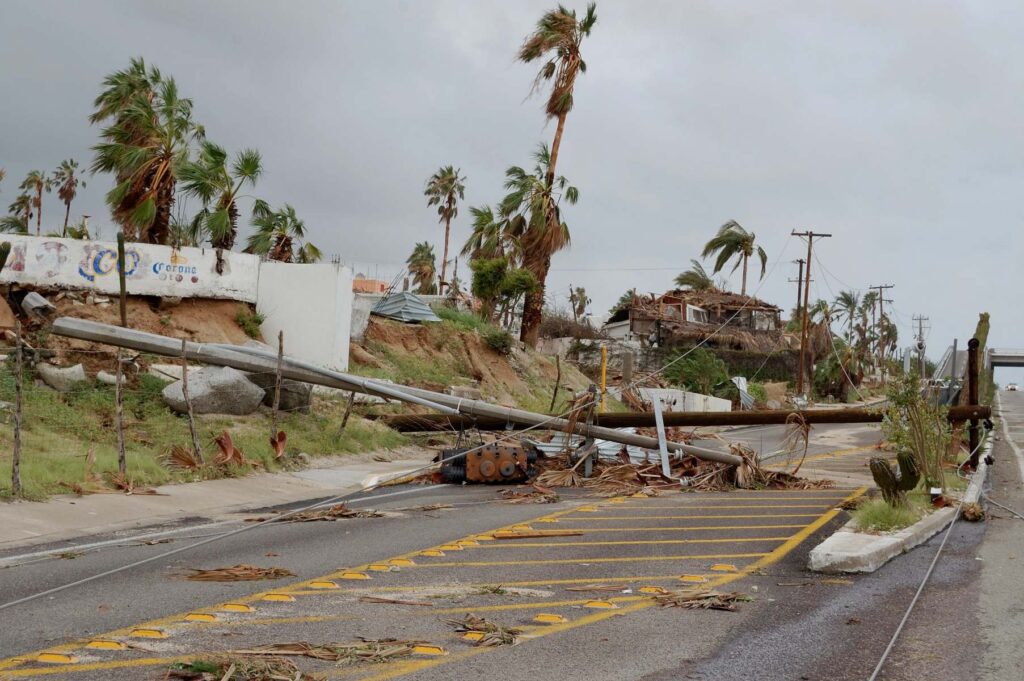
Yet global hurricane records do not show a clear long-term increase in the total number of tropical cyclones. NOAA records also show that the most violent U.S. tornadoes have not exhibited the relentless upward trend suggested by sensational headlines.
The IPCC acknowledges substantial uncertainty about long-term trends in several categories of extreme weather, including tornadoes and flooding.
There are important exceptions. Heavy precipitation has increased in many regions, and heat extremes have become more frequent globally. But the evidence does not justify treating every destructive storm as proof of an accelerating planetary emergency.
Weather has always been dangerous. What has changed dramatically is our ability to survive it. Perhaps the most reassuring climate statistic receives remarkably little attention.
Deaths from weather-related disasters have fallen by more than 99 percent over the past century, according to historical disaster data discussed in Climate at a Glance.
Better forecasting, stronger buildings, modern transportation, improved sanitation, and emergency communications have transformed humanity’s ability to withstand nature.
Even as populations have grown and development has expanded, the risk of dying in a weather disaster has declined enormously. This demonstrates something essential: Human adaptation works.
Another surprise: A greener planet and more abundant food.
Remember the warnings that global warming would devastate agriculture and produce widespread food shortages? The actual record is considerably more encouraging.

Global crop yields have increased dramatically over recent decades. Rice, wheat, and corn production have repeatedly reached record levels. Modern agricultural technology deserves much of the credit, but rising atmospheric carbon dioxide also contributes to plant growth.
NASA satellite observations have documented substantial global greening, with increased carbon dioxide identified as an important contributor. Plants use carbon dioxide in photosynthesis. That elementary biological fact sometimes seems to disappear from discussions portraying CO2 exclusively as a pollutant.
Of course, agriculture still faces drought, flooding, pests, and heat stress. Yet the evidence of improving productivity deserves at least as much attention as speculative forecasts of agricultural collapse.
What happened to the disappearing islands and polar bears?
For years, the public heard predictions that low-lying Pacific islands would disappear beneath rising seas. Yet research has found that many coral atolls have remained stable or increased in land area as sediments shift and accumulate.
That does not eliminate the challenges of rising sea levels, especially saltwater intrusion and flooding. What it does demonstrate is that island geography is more complicated than the familiar image of entire nations simply slipping underwater.
Polar bears provide another instructive example. Despite decades of alarming imagery, the widely predicted population collapse has not occurred.
Here’s the biggest surprise: the worst-case climate models have been withdrawn.
Computer models can be useful scientific tools, but their results depend heavily on assumptions about emissions, climate sensitivity, and future economic development. One particularly troubling example is RCP 8.5, a very-high-emissions scenario frequently used to illustrate effects of extreme future warming. Its plausibility as a realistic future has been strongly challenged, and it has subsequently been withdrawn from scientific use.
RCP 8.5 became the climate establishment’s favorite tool because it generated the most frightening headlines, not because it reflected realistic energy or economic trends. For years, policymakers, media outlets, and activists treated this extreme scenario as business as usual, even though it assumed wildly unrealistic coal consumption, stagnant technological progress, and population trajectories detached from observed reality.
The damage from this manufactured panic extends far beyond climate science. RCP 8.5 was used to justify costly regulations, energy restrictions, attacks on reliable energy, and endless taxpayer funding for speculative research built on worst-case assumptions.
Nevertheless, despite its demise, projections based on it continue today in research and media coverage. It seems some are still addicted to future doom.
When an extreme scenario is presented as the most likely future, public understanding suffers. Scientific uncertainty should be explained, especially when policymakers propose expensive measures based on projected risks.
Read the full article here.


Wind Concerns is a collaboration of citizens of the Lakeland Alberta region against proposed wind turbine projects.